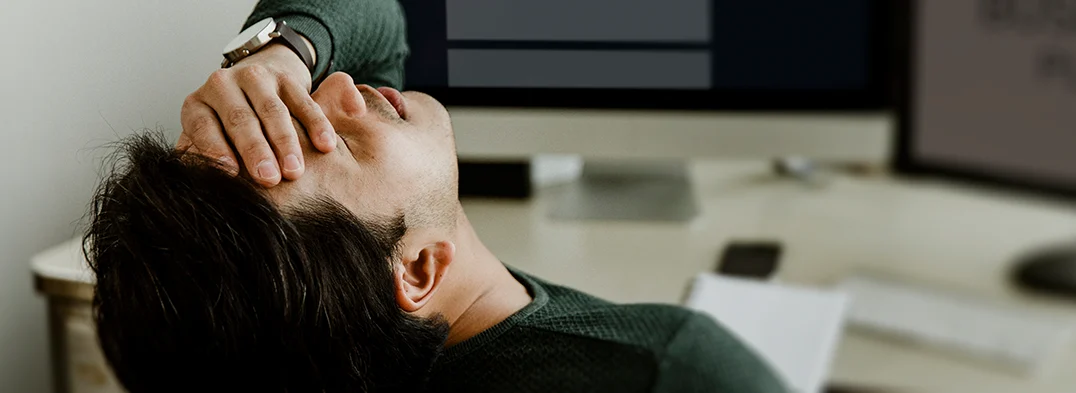
Stress wears down our strength. According to Hans Selye, a distinction is made between good and bad stress (eustress and distress). Stress generally triggers emotional and physical processes in us that throw us out of our harmonious balance. Therefore eustress, like distress, is only for a short time a sensible state that can save us or bring us to peak performance.
When we are not in our balanced, adult self-awareness, our cognitive abilities are limited. In addition, in a state of stress the body uses reserves: the immune system and metabolic processes are “powered down” to provide the additionally needed energy. This puts us into a deficit on several levels.
For a short time our body can compensate for the strain. In today’s society, however, we are very often exposed to stressors (stress triggers) for long periods. Adrenaline and cortisol flood our body, and our mental flexibility is reduced. In the longer term this leads to damage to body and psyche.
Stress is useful
The feeling of stress is a useful alarm signal that points us to unhealthy behaviour. If we ignore it, physical complaints can develop, among them gastrointestinal, skin, cardiovascular and respiratory diseases. Mental disorders such as depression and burnout are also widespread.
Since most stress is based on our own unconscious or unclear thought patterns, we can learn to deal better with existing and new problems. We are not helplessly at the mercy of stress. Through conscious work with our thoughts and feelings we soften the acute negative effects and can in future deal more easily with new strains. This is called building resilience. As a coach I accompany you in this process and show you how it works.
Evolution
To secure human life, nature developed a few useful things:
- the ability to think creatively
- complex communication
- emergency programs that improve our ability to survive in dangerous situations
In the Stone Age such abilities were important for survival. Thinking enables us to shape our environment according to our wishes and organise social communities. It also lets us question ourselves and our position in the universe and be creative. However, thinking also harbours one of humanity’s biggest problems: thoughts stored subconsciously in particular often lead to conflicts inside and with the outside world.
Communication is a great opportunity for human closeness and working together. But since we all have different inner maps shaped by our cultural environment, information often affects us differently from how it was meant. Communication psychology describes this problem and has suggestions for how we can talk to each other better without conflict.
When the Stone Age human sits by the campfire and a bear rustles in the bushes, or when he goes hunting to provide for his clan, emergency programs such as the fight-or-flight response are very useful. For a short time the body can be strongly focused and act and react with above-average strength. But these programs are designed only for occasional short-term use. Afterwards we have to regenerate, because we have performed beyond our healthy measure. If the emergency programs are active for longer, damage arises on the physical and psychological level.
Recognising patterns
Our unconscious, automatic programs determine a large part of our actions. These programs are often unchecked sentences that we believe and by which we judge and act. They were given to us by our social contacts and our culture. When, for example, parents say “You are…” or “One doesn’t do that,” these statements shape patterns in us that unconsciously steer us in a certain direction. We have stored old patterns that do not, or no longer, correspond to our current reality. This leads to inner conflicts, and we feel torn or put under pressure.
We can dissolve this stress by changing beliefs that are no longer useful. Developing new perspectives and views on a situation is therefore an important means of change work. Beliefs and expectations from the unconscious are a common cause of stress.
Overload
Another stressor lies in the overload of our senses. We live in a world flooded with stimuli. Artificial light, noise and air conditioning in urban centres constantly irritate our sensitive ears, eyes and noses. Our sense organs were designed by nature to perceive fine nuances in our environment. In everyday life, however, excessively strong impressions constantly pelt us. The result is permanently high tension, which makes us lose our composure faster in difficult situations.
It is important to create a good balance by going more often into a state of inner silence and into nature.
Modern times
In our world of rapid change our emergency programs are very often activated. That is stress. Although we are mostly not really in life-threatening situations, our thinking often constructs a threatening situation out of social conflicts, whereby the emergency programs are activated. The principle behind it is fear: fear of not being enough, fear of being abandoned, fear of not matching an ideal image.
It helps a lot to recognise that the most common form of fear is purely virtual. The threat mostly takes place only in our thoughts. The reaction of our body, however, is real. Today one cannot escape stressors, but one can learn how to deal with stressful thoughts and feelings.
Ways out of stress
When we are stressed and perhaps already notice pathological changes in psyche or body, we want to act and become fit again. This can happen in various, complementary ways. In my experience it is not enough to eat healthily alone. Light sport and yoga exercises are also helpful for releasing blockages and making us flexible and strong. Fulfilling existential needs such as tenderness, fresh air and sun also contributes to good stress resistance.
My anti-stress coaching therefore also includes breathing and relaxation exercises for the physical level. My main task is to stand by your side on the mental and emotional level. I support you in dealing better with acute strain, recognising new perspectives and finding options. This way you get back into acting and shaping your life yourself. “Empowerment” expresses this aptly.
This article is for general information. It does not replace a medical or psychotherapeutic diagnosis or treatment.